
River Renaissance = 16 SDGs?

Our 'Renaissance' of the Milo and Niger Rivers in Guinea results in meeting 16 of the 17 Sustainable Development Goals (SDG's) of the United Nations. How is this possible? At IPIC, we were even a bit surprised by the significant positive impact of our plan. But it's true.
Huge Community Impact
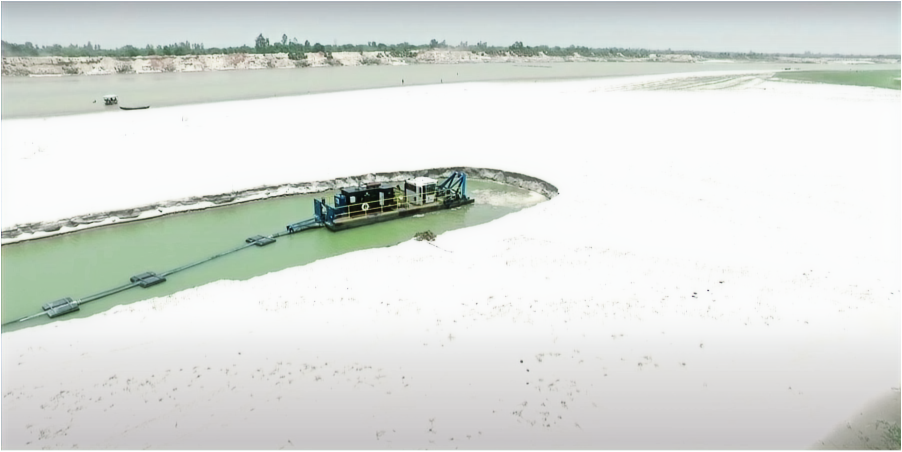
The Milo and Niger River Renaissance projects and Integrated Development Program is one of the most comprehensive and impactful sustainable development initiatives in West Africa. Conceived and promoted by IPIC — International Project Integration Consortium — the program first addresses the severe degradation of the Milo River, a 300 km tributary of the Upper Niger flowing through the Kankan Prefecture of the Republic of Guinea. Decades of sedimentation, deforestation, and unmanaged urban runoff have eliminated the river’s historic navigability, degraded water quality for Kankan’s 250,000+ residents, increased urban flood risk, and collapsed the artisanal fishing and riverine trade economies that once defined the city.
What distinguishes this program is that its primary dredging intervention simultaneously generates six integrated benefit streams:
restored navigability and trade,
clean water supply,
affordable housing bricks
direct produced fertilizer,
flood protection,
comprehensive community development programme encompassing education, agricultural training, and women’s economic empowerment through agrivoltaics.
The river dredging output becomes the source material for a multi-million-dollar annual production platform.
The programme addresses 16 of the 17 United Nations Sustainable Development Goals — an
SDG | How This Programme Contributes |
SDG 1 — No Poverty | River trade revival, brick/fertilizer employment, agrivoltaic income for riverside communities |
SDG 2 — Zero Hunger | Local fertilizer boosts crop yields; agrivoltaic irrigation extends growing season; fishing restored |
SDG 3 — Good Health | Contaminated sediment removed; waterborne disease reduced; clean municipal water supply |
SDG 4 — Quality Education | Containerized training centers in Kankan, Diankana, and Dabola: agricultural techniques, fertilizer use, CEB construction, model housing |
SDG 5 — Gender Equality | Agrivoltaic cooperatives specifically structured for women villagers; income ownership, skills, employment |
SDG 6 — Clean Water | River ecosystem restoration; improved raw water quality for municipal treatment system |
SDG 7 — Affordable Clean Energy | Community-scale agrivoltaic arrays supply clean electricity to riverside villages along the downstream corridor |
SDG 8 — Decent Work | Dredging, CEB production, fertilizer manufacturing, training centers, agrivoltaic cooperatives — broad employment creation |
SDG 9 — Infrastructure | River navigability restored from Dabola to Diankana; Kankan reconnected to regional and international trade |
SDG 10 — Reduced Inequalities | Women’s agrivoltaic employment; training centers serving rural communities; affordable housing and fertilizer for lower-income households |
SDG 11 — Sustainable Cities | ~10,300 homes per season; flood risk reduction; model housing demonstrations at training centers |
SDG 12 — Responsible Consumption | 100% spoil utilization — zero industrial waste; agrivoltaics reduce diesel dependency in communities |
SDG 13 — Climate Action | Flood resilience; CEB vs. fired brick; organic fertilizer vs. synthetic NPK; solar agrivoltaics replacing diesel generators |
SDG 14 — Life Below Water | Aquatic biodiversity restored; dissolved oxygen improved; fish populations recovered |
SDG 15 — Life on Land | Riparian reforestation; no deforestation for brick firing; soil fertility restored by organic fertilizer |
SDG 17 — Partnerships | World Bank, AfDB, EU, USAID, GCF, IsDB, OPEC Fund eligibility; community partnership framework; government co-promotion |


Comments